Transforming Legal Debt Recovery for Regulated Banking
Project For a Large European Bank
TL;DR
This case study covers the delivery of a digital platform for one of Europe’s leading banks to manage judicial debt recovery within an extremely regulated environment. We combined cutting-edge AI prototyping tools with a redefined delivery process to accelerate validation, reduce handovers, and stay ahead of tight regulatory deadlines. As Delivery Lead and Lead Analyst, I drove end-to-end execution — from business analysis to agile delivery — resulting in a scalable, compliant solution now entering phased rollout.
The Challenge
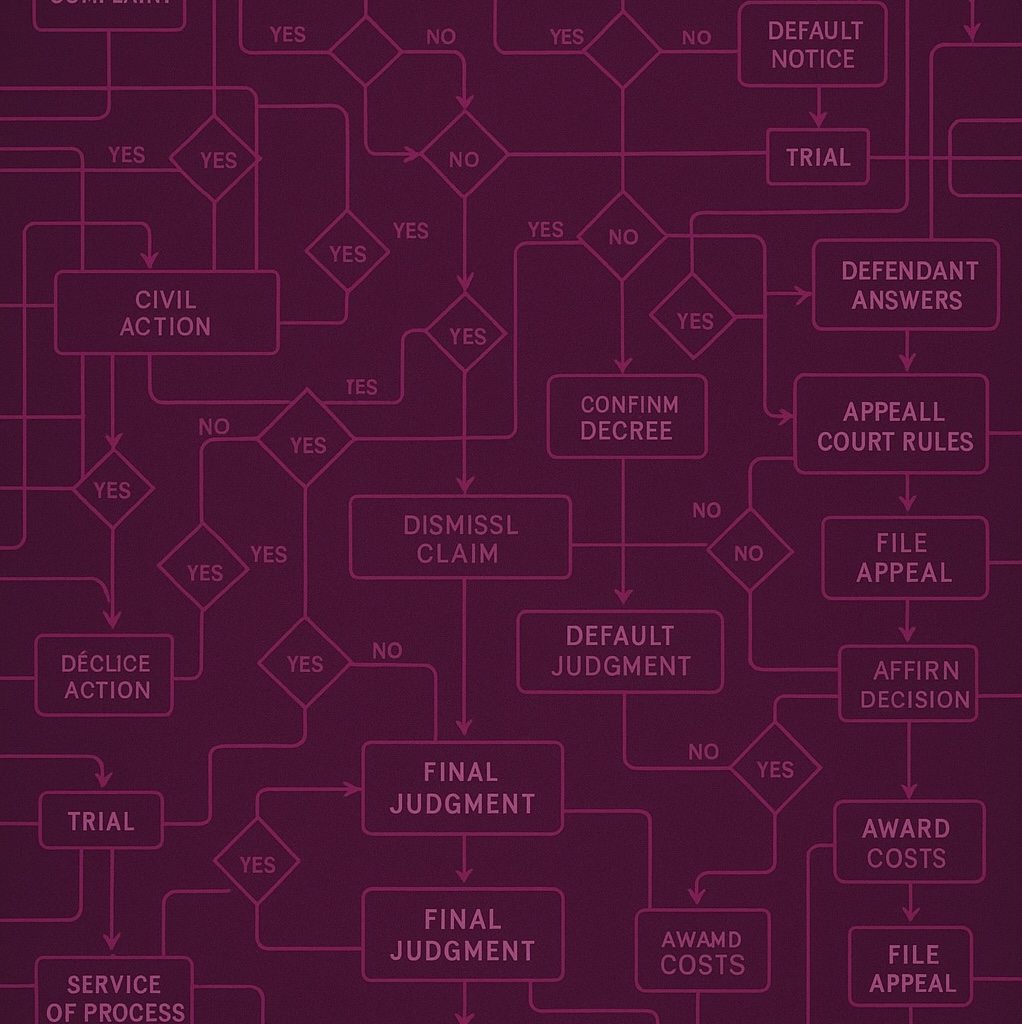
The client — large European bank — faced significant inefficiencies in how it managed judicial processing of non-performing loans (NPLs). Fragmented legacy tools, excessive manual work, limited auditability, and compliance risks made it difficult to track recoveries, settlements, legal costs, and account actions in a transparent and scalable way.
The process required alignment between multiple departments (DMD, BDRU, Legal Office, Risk), strict regulatory frameworks (MFSA Banking Rules), and integration with core banking systems. The bank needed a secure, traceable, and automated system to manage the entire lifecycle of a debtor in litigation — from induction to closure.
The Solution
We designed and delivered a modular digital platform tailored to the full lifecycle of judicial debt recovery — covering:
- Customer induction
- Review workflows with strategy definition and multi-level approval chains
- Partial settlements and write-offs
- Legal proceedings and judicial sale execution
- Legal cost tracking
- Final recovery and closure
The solution included:
- A Property Management module for managing collateral assets and real estate sales
- Audit logs, comment trails, and role-based permissions
- Full alignment with internal and regulatory reporting needs
Technology stack and architecture highlights
- Java-based backend supporting modular business logic and secure integrations
- Vue-based frontend, offering a performant UI for case workers, legal teams, and senior approvers
- Role-based access across departments and workflows
- Integration points with FlexCube (for account data), CPS (for collateral data), Therefore (DMS), and other internal systems
- Full environment split (DEV, UAT, PROD) with continuous deployment pipelines and manual gates
The Process
As Delivery Lead and Lead Analyst, I was responsible for shaping the vision into a strong foundation for delivery of solution. I conducted a full analysis of user needs, system gaps, and regulatory obligations.
Key Responsibilities included:
- On-site workshops at client headquarters with stakeholders from DMD, Legal, Risk, and IT
- Daily interviews with legal officers, underwriters, and recovery teams
- Mapping of existing technical infrastructure and interfaces
- Review and analysis of legacy tools used in property sales and cost tracking
- Creation of full process maps across all recovery scenarios
- Design of system data model, covering exposure, account, party, and strategy objects
- Collection and consolidation of all regulatory and internal requirements
- Specification of all user journeys, including edge cases and exceptional workflows
- Prototyping of key interface elements in Figma, with stakeholder walkthroughs
As Delivery Lead and Lead Analyst, I was responsible for deepp requirement analysis, the end-to-end planning and coordination of implementation across design, development, and testing workstreams.
Key Responsibilities included:
Team setup and leadership of a 9-person cross-functional squad (FE, BE, UX, QA)
Facilitation of agile ceremonies (refinements, reviews, retrospectives, stand-ups)
Ownership of Jira backlog and roadmap planning
Bi-weekly business workshops for requirement clarification and design iteration
UI/UX design validation and alignment with system constraints
Coordination of QA and UAT, ensuring test traceability
Definition of go/no-go criteria and release planning
Alignment with internal banking IT teams (environments, APIs, security)
Weekly stakeholder reporting and risk communication
Accelerated Development With AI Tools
To streamline the design and validation process, we implemented a modern, AI-powered prototyping approach that significantly reduced feedback loops and improved clarity for stakeholders.
Instead of following the traditional UX path — creating Figma screens, then Figma prototypes, followed by front-end implementation — we adopted a dynamic and iterative flow enabled by AI tools such as Lovable and Bolt.

Our Process
- Requirement discussion: Held live requirement-gathering and analysis workshops with the client.
- Rapid AI prototyping: Used AI tools to generate a clickable front-end application, often with sample test data already embedded inside.
- Early feedback collection: Presented the clickable prototype to stakeholders to collect early feedback on structure, usability, and logic.
- Code enhancement: Took the generated codebase and enhanced it to a high-fidelity prototype with finalized design details.
- Design validation: Presented the polished version to the client for approval as part of the ongoing design validation loop.
- Test domain deployment: Once approved, the prototype was published to a test Netlify domain, making it available for early front-end testing, even before back-end development was finalized.
Key Benefits
- Faster iterations on UI and functionality with real-time client input.
- Reduced ambiguity around requirements by showing actual user flows early.
- Improved transparency for stakeholders with a working preview of the solution.
- Enabled early testing of front-end behavior before full-stack integration and UAT phases.
Team Impact
This new approach had a transformative impact on the way the team operated:
- Front-end developers were integrated into the design team and began actively participating in client workshops. This allowed them to catch change requests and edge cases in real-time.
- The collaboration between designers and developers tightened significantly, with both groups co-creating the AI-generated prototypes.
- What was previously two separate domains — the creative process and engineering — became one unified delivery stream, with continuous dialogue and joint ownership of the solution.
- As a result, we significantly accelerated delivery, shortened validation cycles, and improved the overall quality and feasibility of the final design.
This shift not only improved delivery efficiency, but also fostered a deeper sense of shared responsibility and ownership across the entire product team.
The Results
The project has already delivered:
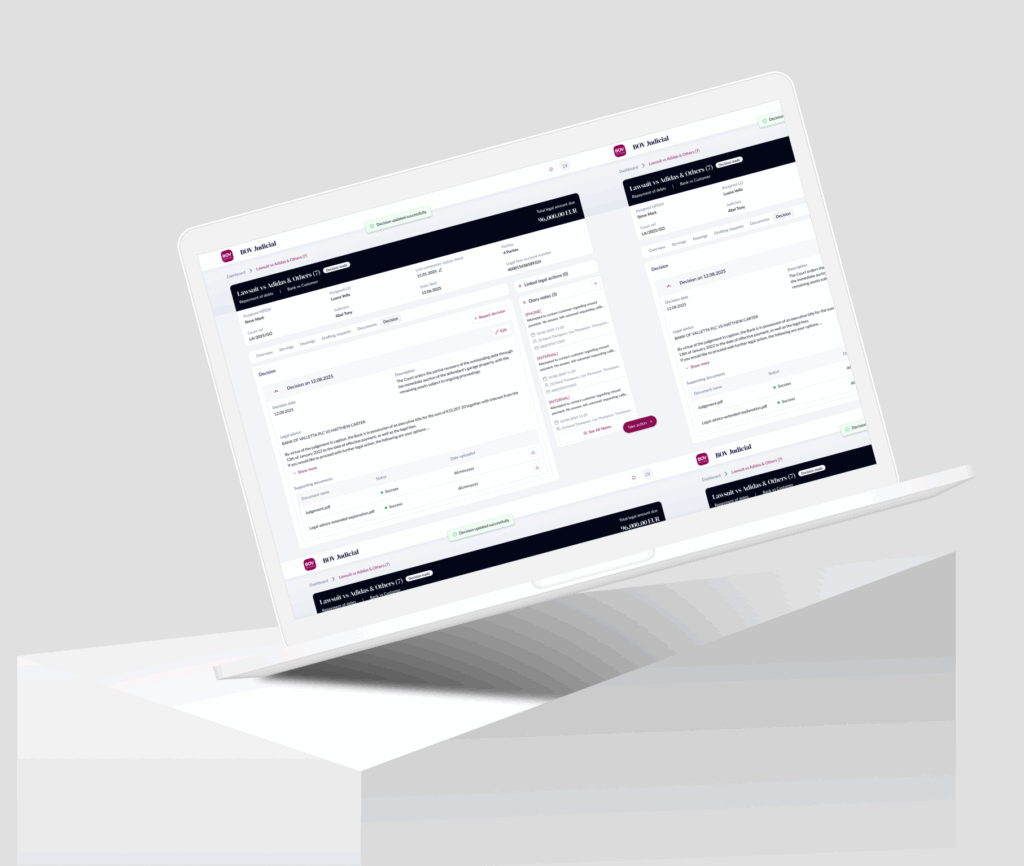
- A robust MVP covering core workflows: review creation, strategy approval, judicial action tracking, and closure
- Real-time visibility into collateral position, recovery progress, and legal costs
- Seamless integration with core banking data for exposures and account statuses
- Structured workflows with traceable multi-role approvals
- Strong foundation for reporting and compliance alignment with MFSA regulations
The platform is now live in internal UAT and progressing toward a phased rollout, with multiple modules (Property, Review, Legal Costs) already operational. The approach is designed for long-term scalability and expansion to new jurisdictions and business units.